






3D Wheel Alignment: How It Improves Accuracy and Extends Tire Life
Home » 3D Wheel Alignment: How It Improves Accuracy and Extends Tire Life
Introduction: The Shift Towards Precision in Wheel Alignment
In recent years, the automotive aftermarket has witnessed a significant shift toward precision and advanced diagnostics. With vehicles becoming increasingly complex—especially electric vehicles (EVs) and those equipped with ADAS (Advanced Driver Assistance Systems)—traditional 2D and CCD alignment systems are no longer sufficient. Workshops are seeking tools that not only improve alignment accuracy but also extend tire life and reduce long-term maintenance costs. 3D wheel alignment has emerged as the preferred solution to meet these modern demands.
How 3D Wheel Alignment Works
3D wheel alignment systems utilize multiple high-resolution cameras and sensors to capture the position of all four wheels simultaneously. Unlike 2D systems, which rely on limited measurement points, 3D systems provide a full three-dimensional analysis of wheel geometry, including camber, caster, and toe angles. These measurements allow technicians to detect subtle misalignments that can cause uneven tire wear or steering problems.
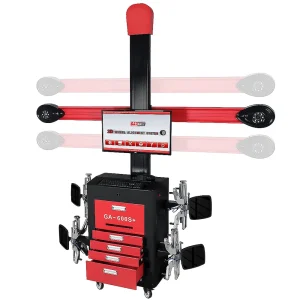
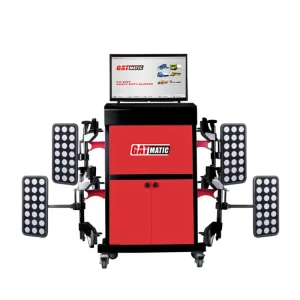
For example, the GATmatic GA-600S and GA-600 systems combine HD cameras with auto-tracking targets to provide continuous real-time feedback during adjustments. This enables precise calibration of modern vehicles, including EVs and vehicles with advanced suspension systems.
| Alignment System | Measurement Method | Typical Accuracy | Average Tire Life Extension |
|---|---|---|---|
| 2D Wheel Alignment | Single-camera or laser | ±3-5 mm | 5-10% |
| CCD Wheel Alignment | Multi-camera | ±2 mm | 10-15% |
| 3D Wheel Alignment | High-res cameras & sensors | ±1 mm | 15-20% |
Benefits for Tire Life and Vehicle Safety
Accurate alignment directly impacts tire performance and safety. Misaligned wheels accelerate uneven wear, increase rolling resistance, and can negatively affect fuel efficiency. By utilizing 3D wheel alignment, workshops can:
- Extend tire lifespan by up to 20%
- Reduce the frequency of premature tire replacement
- Improve vehicle handling and stability
- Maintain OEM specifications for EVs and ADAS-equipped vehicles
This accuracy is especially critical for high-performance and electric vehicles, where even minor misalignments can affect suspension systems and sensor calibration.
Economic and Operational Advantages for Workshops
Investing in 3D alignment systems also provides tangible business benefits:
- Reduced labor time per vehicle through faster setup and measurement
- Fewer repeat visits due to misalignment-related complaints
- Enhanced reputation for precision and reliability, attracting more high-value clients
The cost-saving potential extends beyond tires. Correct alignment reduces stress on suspension components, preventing premature wear and costly repairs. Workshops equipped with GATmatic’s GA-series 3D aligners are positioned to deliver both technical excellence and economic efficiency.
Integration with Modern Workshop Workflows
3D wheel alignment systems integrate seamlessly with modern workshop operations. Auto-tracking targets, wireless data transfer, and user-friendly interfaces allow technicians to focus on precision adjustments rather than setup procedures. Integration with workshop management systems can further enhance productivity and record-keeping, enabling performance tracking for each vehicle serviced.
Conclusion
3D wheel alignment represents a major advancement in automotive maintenance. By offering superior accuracy, extended tire life, and compatibility with modern vehicle technologies, it addresses both technical and economic concerns for professional workshops. As the automotive industry evolves, workshops that adopt 3D alignment systems are not just keeping pace—they are setting the standard for precision, efficiency, and customer trust.