




Introduction
Modern engines rely heavily on precise fuel delivery to maintain performance, fuel efficiency, and emissions compliance. When fuel injectors fail or become clogged, drivers may experience rough idling, engine hesitation, poor acceleration, or increased fuel consumption.
Because these symptoms often overlap with ignition or sensor-related issues, diagnosing fuel system problems accurately has become increasingly challenging. This is why fuel injector testers have become essential tools for both professional workshops and advanced DIY users.
Understanding how fuel injector cleaner & testers work — and how they improve diagnostic accuracy — can help reduce unnecessary repairs, shorten troubleshooting time, and improve overall vehicle performance.

Quick Answer
A fuel injector tester and cleaner is a diagnostic tool used to evaluate injector performance, pulse response, spray patterns, and fuel delivery consistency. It helps technicians identify clogged, leaking, or malfunctioning injectors accurately without relying solely on fault codes or guesswork.
Why Fuel Injector Problems Are Difficult to Diagnose
Fuel injector issues can mimic many other engine problems. A clogged injector may produce symptoms similar to vacuum leaks, ignition misfires, or fuel pressure issues. In modern direct injection engines, these problems become even harder to identify due to complex ECU adjustments and adaptive fuel trims.
Industry estimates suggest that nearly 30% of fuel-system-related repairs involve unnecessary parts replacement caused by incomplete diagnostics. Many workshops replace spark plugs, ignition coils, or oxygen sensors before identifying the actual injector issue.
This diagnostic overlap makes proper injector testing critical in modern automotive repair.
What Is a Fuel Injector Tester?
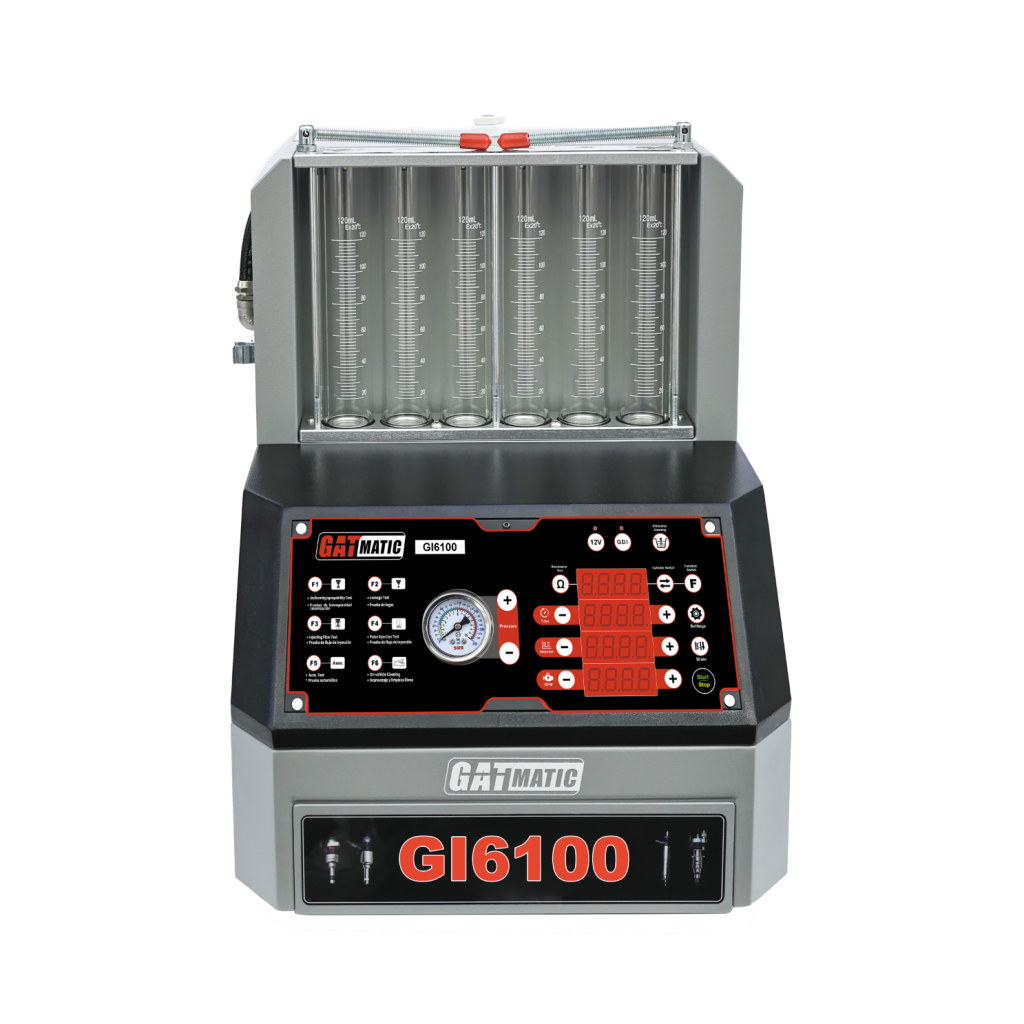
A fuel injector tester is a specialized automotive diagnostic device designed to evaluate injector operation and fuel delivery performance. Depending on the system, it can test injector pulse frequency, spray atomization, flow consistency, and leakage conditions.
Modern fuel injector testers are commonly used for:
- Injector pulse testing
- Injector cleaning
- Flow balancing
- Leak detection
- GDI and piezo injector diagnostics
Advanced systems combine cleaning and testing functions into a single unit, allowing technicians to diagnose and restore injector performance more efficiently.
Common Symptoms of Fuel Injector Problems
When injectors fail to operate correctly, the engine may struggle to maintain the proper air-fuel ratio. This often results in unstable combustion and reduced engine efficiency.
Drivers may notice rough idle conditions, slow throttle response, reduced fuel economy, or engine hesitation during acceleration. In severe cases, injector problems can trigger check engine lights and fault codes related to lean conditions or cylinder misfires.
| Symptom | Possible Injector Issue |
|---|---|
| Rough idle | Clogged injector |
| Engine misfire | Uneven fuel delivery |
| Poor fuel economy | Injector leakage |
| Hard starting | Fuel pressure imbalance |
| Loss of power | Restricted injector flow |
These symptoms should always be verified through proper diagnostic procedures rather than immediate component replacement.
How Fuel Injector Testers Work
Fuel injector cleaner & tester simulate ECU injector signals and analyze how injectors respond under controlled conditions. The tool sends pulse commands to the injector while monitoring spray patterns, flow rate, and consistency.
Professional systems also use ultrasonic cleaning technology to remove carbon deposits and restore injector efficiency. This is especially important in modern GDI engines, where carbon buildup can significantly impact fuel atomization.
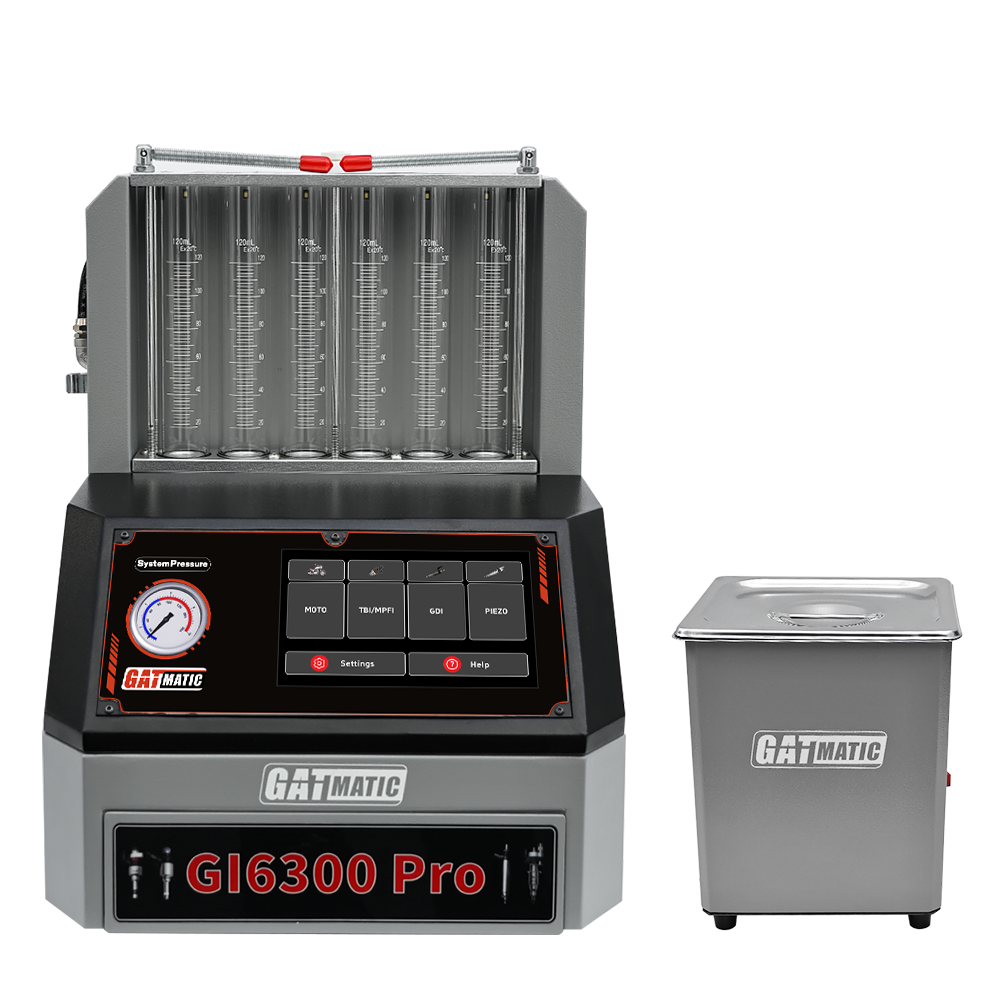
Advanced diagnostic platforms such as the GATmatic GI6300 Pro support piezo injectors, GDI systems, and motorcycle injectors, allowing workshops to handle multiple injector types with a single platform while improving testing precision.
Why Modern GDI Engines Require Advanced Injector Diagnostics
Gasoline Direct Injection (GDI) systems operate under much higher fuel pressures than traditional port injection systems. This improves efficiency and emissions performance, but it also increases diagnostic complexity.
Modern injectors must deliver extremely precise fuel quantities within milliseconds. Even minor restrictions or leakage can affect combustion quality and trigger drivability issues.
Traditional injector testing methods are often insufficient for modern GDI and piezo systems. Workshops increasingly require advanced injector diagnostic and cleaning equipment capable of supporting high-pressure systems and modern injector technologies.
According to industry reports, GDI-equipped vehicles now account for over 50% of new gasoline vehicles globally, making advanced injector diagnostics more important than ever.
Fuel Injector Tester vs Traditional Diagnosis
Traditional diagnosis often relies on symptom observation and fault code scanning. While this approach can identify general engine issues, it may not accurately isolate injector performance problems.
Fuel injector testers provide measurable data, allowing technicians to verify injector operation directly rather than relying on assumptions.
| Diagnostic Method | Accuracy | Speed |
| Manual inspection | Medium | Slow |
| Fault code scanning | Medium | Fast |
| Fuel injector testing | High | High |
This diagnostic precision helps reduce unnecessary repairs and improves workshop efficiency.
How Fuel Injector Cleaning Improves Performance
Over time, carbon deposits and fuel contaminants can affect injector spray patterns and fuel atomization quality. Poor atomization reduces combustion efficiency, leading to increased emissions and performance loss.
Injector cleaning systems restore spray consistency and fuel delivery balance, helping improve engine smoothness and throttle response. Many workshops now combine injector testing and cleaning as part of preventive maintenance services.
This approach not only improves vehicle performance but also helps extend injector lifespan and reduce long-term repair costs.
Choosing the Right Fuel Injector Tester
Selecting the right fuel injector tester depends on vehicle coverage, injector compatibility, and diagnostic depth. Workshops servicing modern vehicles should prioritize systems that support GDI, piezo injectors, and ultrasonic cleaning functions.
Ease of operation, testing precision, and software reliability also play important roles in improving workflow efficiency. Integrated testing and cleaning platforms often provide better long-term value compared to standalone systems.
Conclusion
Fuel injector problems are becoming increasingly difficult to diagnose as modern fuel systems grow more advanced. Relying solely on fault codes or symptom-based diagnosis often leads to unnecessary repairs and inaccurate troubleshooting.
Fuel injector cleaner and testers provide a faster and more accurate way to evaluate injector performance, helping workshops and technicians reduce diagnostic errors while improving repair efficiency.
As GDI and piezo injector systems continue to expand across the automotive industry, advanced injector testing and cleaning equipment will play an even more critical role in modern vehicle diagnostics.
Frequently Asked Questions (FAQ)
What does a fuel injector tester do?
A fuel injector tester evaluates injector performance by checking pulse response, spray patterns, flow consistency, and leakage conditions. It helps technicians accurately diagnose clogged, leaking, or malfunctioning injectors without relying solely on fault codes.
Can a bad fuel injector trigger a check engine light?
Yes. A faulty fuel injector can disrupt the air-fuel ratio and cause engine misfires, lean conditions, or combustion problems. This often triggers the check engine light and stores diagnostic trouble codes such as P0171 or P0300.
How do I know if my fuel injector is clogged?
Common signs of a clogged fuel injector include rough idle, hesitation during acceleration, poor fuel economy, hard starting, and reduced engine power. Proper injector testing is recommended to confirm the issue before replacing parts.
Can fuel injectors be tested without removing them?
Yes. Many modern fuel injector testers can evaluate injector pulse signals and performance without fully removing the injectors from the vehicle. However, advanced cleaning and flow testing often require injector removal for accurate results.
What is the difference between injector cleaning and injector testing?
Injector testing focuses on diagnosing injector performance and identifying faults such as leakage or uneven flow. Injector cleaning removes carbon deposits and contaminants to restore spray quality and fuel delivery efficiency.
Are fuel injector testers worth it for repair workshops?
Yes. Fuel injector testers help workshops reduce misdiagnosis, improve repair accuracy, shorten troubleshooting time, and avoid unnecessary parts replacement. They are increasingly essential for servicing modern GDI and piezo injector systems.
How often should fuel injectors be cleaned or tested?
Fuel injectors should typically be inspected or cleaned every 30,000 to 60,000 miles, depending on fuel quality, driving conditions, and vehicle type. Vehicles experiencing rough idle, poor acceleration, or fuel economy issues may require earlier testing.