





Introduction
Wheel balancing is a fundamental part of automotive maintenance, directly affecting driving comfort, tire wear, and vehicle safety. In professional workshops, tire balancing is typically performed using computerized balancing machines that deliver precise results within minutes. However, many people still ask: how can we balance car tires without a balancer?
While it is technically possible to balance tires without specialized equipment, the process is less accurate and often only suitable as a temporary solution. Understanding how manual balancing works—and its limitations—can help both technicians and workshop owners make better decisions when it comes to service quality and equipment investment.
Why Proper Tire Balancing Is Critical
When a tire is not evenly balanced, its weight distribution becomes irregular, causing vibration that is most noticeable at higher speeds. Over time, this imbalance leads to uneven tread wear, reduced tire lifespan, and additional stress on suspension components.
Industry studies suggest that improper wheel balancing can reduce tire life by up to 20% and negatively impact fuel efficiency due to increased rolling resistance. For automotive workshops, this translates into both a risk and an opportunity: poor balancing leads to customer complaints, while precise balancing improves retention and service value.
Modern workshops typically integrate wheel balancing with other services such as alignment and tire changing , creating a more efficient and profitable workflow.
Is It Really Possible to Balance Tires Without a Balancer?
Balancing tires without a machine is possible in principle, but it relies heavily on estimation rather than precise measurement. Manual techniques attempt to identify the heavier sections of the wheel and compensate by adding counterweights. However, without digital sensors, it is impossible to fully detect dynamic imbalance, which occurs when the tire rotates at speed.
This means that while manual balancing can reduce noticeable vibration in low-speed conditions, it cannot match the accuracy required for modern vehicles, especially those driven on highways or equipped with advanced suspension systems.
Common Manual Methods Used in Tire Balancing
One of the most basic approaches is static balancing using a jack. By lifting the vehicle and allowing the wheel to rotate freely, the heaviest point naturally settles at the bottom. Technicians then add weight to the opposite side to offset the imbalance. Although simple, this method only addresses static imbalance and ignores forces that appear during rotation.
Another approach involves using a bubble balancer, a manual tool that provides a rough visual indication of imbalance. Compared to purely observational methods, it offers slightly improved accuracy, but still falls short of modern standards.
In some cases, technicians rely on road testing to identify vibration patterns and adjust weights accordingly. This trial-and-error method depends heavily on experience and can be time-consuming, making it unsuitable for high-efficiency workshop environments.
Manual vs Machine Tire Balancing
| Factor | Manual Balancing | Machine Balancing |
|---|---|---|
| Accuracy | Limited | High precision |
| Speed | Slow | Fast |
| Consistency | Variable | Stable |
| Skill Dependency | High | Moderate |
| Application | Temporary or low-speed use | Professional service |
Computerized wheel balancers are designed to detect both static and dynamic imbalance with a high degree of accuracy. They significantly reduce human error and ensure repeatable results, which is essential for maintaining workshop standards.
Limitations of Balancing Tires Without Equipment
The main limitation of manual balancing lies in its inability to measure dynamic forces. Even if a tire appears balanced when stationary, it may still produce vibration when rotating at higher speeds. This can lead to continued wear and reduced driving comfort.
Additionally, incorrect weight placement can sometimes worsen the imbalance. For workshops, this not only affects service quality but can also damage reputation. As customer expectations continue to rise, relying on outdated methods becomes increasingly impractical.
How Modern Equipment Improves Workshop Performance
Modern automotive service equipment has transformed the way tire balancing is performed. Advanced wheel balancing machines use digital sensors and automated calculations to identify even the smallest imbalance. This not only improves accuracy but also significantly reduces service time.
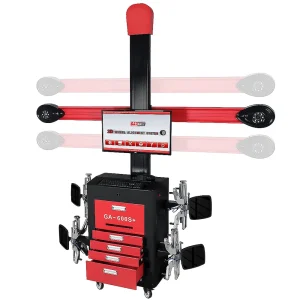
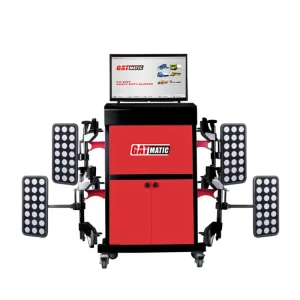
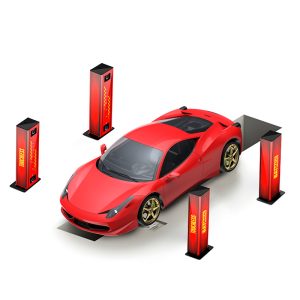
When combined with wheel alignment systems, workshops can offer a complete wheel service solution. This integrated approach improves workflow efficiency, increases revenue per vehicle, and enhances overall customer satisfaction.
From a business perspective, investing in professional equipment is not just about precision—it is about scalability, consistency, and long-term competitiveness in the automotive aftermarket.

Conclusion
Balancing car tires without a balancer is possible, but it is far from ideal. Manual methods can provide temporary improvements, especially in low-speed or emergency situations, but they cannot replace the accuracy and efficiency of modern balancing machines.
For workshops aiming to deliver professional service and build long-term customer trust, adopting advanced tire balancing equipment is the most effective solution. As the automotive industry continues to evolve, precision and efficiency will remain key factors in staying competitive.