

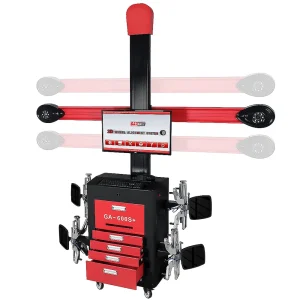
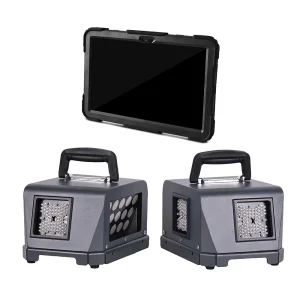
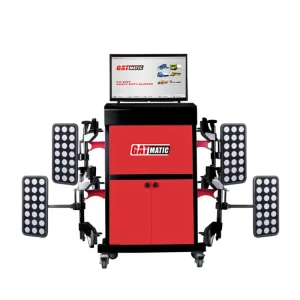




Introduction: Why Touchless Wheel Alignment Is Reshaping Modern Workshops
The automotive service industry is entering a new era of precision diagnostics and intelligent workshop equipment. As modern vehicles become increasingly dependent on electronic steering systems, ADAS calibration, and low-profile alloy wheels, traditional alignment methods are struggling to meet evolving service expectations. Today, workshops are under pressure to improve speed, accuracy, wheel protection, and customer experience simultaneously. This is one of the key reasons why Touchless Wheel Alignment technology is rapidly becoming one of the most discussed innovations in the automotive aftermarket.
Unlike conventional systems that rely on wheel clamps and manual mounting procedures, touchless wheel alignment systems use advanced 3D imaging, laser scanning, and intelligent software algorithms to measure wheel geometry without physically contacting the wheel rim. The result is faster measurements, reduced human error, improved workflow efficiency, and zero risk of wheel damage.
As premium vehicles, electric vehicles (EVs), and ADAS-equipped models continue growing globally, many professional workshops are upgrading from traditional CCD Wheel Aligners and standard 3D Wheel Alignment Machines to next-generation Touchless Wheel Aligners that support higher precision and faster operation.
How Does Touchless Wheel Alignment Work?
Traditional wheel alignment systems typically require technicians to attach clamps or targets directly onto the wheels before measurements can begin. This process not only consumes time but also introduces the possibility of installation inconsistencies that may affect measurement accuracy.
In contrast, Touchless Wheel Alignment systems eliminate physical mounting entirely. The vehicle is simply driven onto the alignment platform, where high-definition optical cameras and laser sensors scan the wheel and suspension geometry in real time. The software instantly analyzes critical alignment angles such as camber, caster, toe, thrust angle, and steering axis inclination.
Because the entire process is automated and digitally calibrated, touchless systems can dramatically reduce operator-related variables. Advanced systems such as the GATmatic GA-800 series touchless wheel alignment system integrate intelligent image recognition and real-time data processing technologies capable of completing measurements within seconds.
| Alignment Technology | Measurement Method | Average Setup Time | Wheel Contact | Typical Accuracy |
|---|---|---|---|---|
| Traditional CCD Alignment | Clamp-mounted sensors | 5–10 min | Yes | ±2 mm |
| Standard 3D Alignment | Camera + targets | 2–5 min | Partial | ±1 mm |
| GATmatic Touchless Wheel Alignment | Laser + 3D optical imaging | 1.5 sec | No | ±1 mm or better |
Compared with traditional systems, touchless technology significantly improves consistency while simplifying the overall alignment workflow.

Why Wheel Protection Has Become a Major Industry Concern
Wheel designs have changed dramatically over the past decade. Luxury vehicles, sports cars, and EVs increasingly use lightweight alloy wheels with premium painted or polished finishes. These wheels are expensive to repair or replace, making protection during service procedures extremely important.
Traditional wheel alignment clamps can occasionally leave scratches, pressure marks, or edge damage during installation, particularly when technicians work quickly in high-volume workshops. For premium vehicle owners, even minor cosmetic wheel damage can negatively affect customer satisfaction.
This is where contactless wheel alignment systems offer a significant advantage. Since the system never physically touches the wheel surface, the possibility of rim damage is completely eliminated. This makes Touchless Wheel Aligners particularly attractive for luxury vehicle workshops, EV service centers, tire shops, and dealership environments where wheel protection standards are extremely high.
As customer expectations continue rising, workshops equipped with non-contact alignment technology are increasingly viewed as more advanced, professional, and trustworthy.
Why Accuracy Matters More Than Ever
Modern vehicles are far more sensitive to alignment deviations than older vehicles. Even small inaccuracies can affect tire wear, steering feel, suspension stability, fuel efficiency, and ADAS sensor calibration.
For electric vehicles, alignment precision is especially critical because EV battery systems add significant vehicle weight. Incorrect wheel geometry increases rolling resistance, accelerates tire wear, and reduces driving range. Improper alignment may also affect regenerative braking balance and vehicle handling characteristics.
ADAS-equipped vehicles create another challenge for workshops. Systems such as lane keeping assist, adaptive cruise control, collision avoidance, and autonomous driving features rely heavily on accurate steering and wheel geometry data. Poor alignment can interfere with sensor calibration and compromise driving assistance performance.
This is one reason why many workshops are now combining Touchless Wheel Alignment Systems with advanced ADAS calibration workflows to improve overall vehicle diagnostic accuracy.
According to several automotive service studies, improper alignment can reduce tire lifespan by up to 20% while also increasing rolling resistance and fuel consumption. High-precision alignment technology therefore directly contributes to both vehicle safety and long-term operating cost reduction.
The Impact of Touchless Alignment on Workshop Efficiency
Modern workshops are no longer evaluated only by repair quality. Productivity, workflow speed, and customer turnaround time are now equally important business factors.
Traditional alignment procedures can consume considerable technician time because wheel clamps must be installed, adjusted, calibrated, and removed manually. In high-volume service centers, these extra minutes accumulate rapidly throughout the day.
By eliminating the clamp installation process, Touchless Wheel Alignment Machines significantly reduce preparation time. Some systems can complete vehicle scanning within 5–10 seconds, allowing workshops to increase daily throughput without sacrificing measurement accuracy.
The workflow improvements extend beyond speed. Technicians experience less physical strain because they no longer need to repeatedly lift and adjust heavy wheel clamps. Reduced fatigue contributes to more consistent performance over long working hours.
Many workshops investing in advanced Wheel Alignment Equipment also integrate digital reporting systems that automatically generate alignment reports for customers. These visual reports help explain tire wear conditions, steering deviations, and suspension issues more transparently, improving customer trust and service acceptance rates.
Touchless Wheel Alignment and the Future of Automotive Service
The future of automotive maintenance is becoming increasingly digital, connected, and automated. As workshops transition toward smart service ecosystems, technologies such as AI diagnostics, predictive maintenance, and cloud-connected workshop management platforms are becoming more common.
Touchless Wheel Alignment aligns perfectly with this transformation because it already relies heavily on imaging systems, automated analysis, and digital vehicle measurement.
Industry analysts expect strong growth in demand for non-contact wheel alignment systems over the next several years, particularly as EV adoption and ADAS-equipped vehicles continue expanding globally. High-end workshops are increasingly positioning touchless alignment as a premium diagnostic service rather than simply a wheel adjustment procedure.
Future systems may integrate AI-assisted suspension diagnostics, automatic vehicle recognition, cloud-based alignment history tracking, and predictive tire wear analysis. This evolution will further increase the strategic value of advanced alignment technology within modern workshops.
Conclusion
Touchless Wheel Alignment is rapidly redefining how modern workshops approach wheel service and vehicle diagnostics. By combining high-speed 3D imaging, laser scanning, intelligent software analysis, and non-contact measurement technology, these systems deliver higher accuracy, faster operation, and complete wheel protection.
As EV technology, ADAS systems, and premium vehicle ownership continue growing worldwide, the demand for advanced Wheel Alignment Systems will continue accelerating. Workshops that adopt Touchless Wheel Aligners are not only improving operational efficiency but also positioning themselves for the future of automotive service.
For modern repair centers focused on precision, professionalism, workflow optimization, and customer experience, touchless alignment is no longer simply an upgrade — it is becoming the next industry standard.
FAQ – About Touchless Wheel Alignment
What is the biggest advantage of touchless wheel alignment?
The biggest advantage of touchless wheel alignment is that it measures wheel geometry without physically contacting the rims. This eliminates the risk of wheel scratches while improving measurement speed and consistency. Compared with traditional systems, touchless technology also reduces human mounting errors and improves workshop efficiency.
Is touchless wheel alignment more accurate than traditional alignment?
Yes. Modern touchless wheel alignment systems use high-resolution 3D cameras, laser sensors, and intelligent software algorithms to deliver highly precise measurements. Automated scanning reduces the possibility of operator-related inconsistencies commonly found in clamp-based alignment systems.
Why is touchless wheel alignment recommended for EVs and luxury vehicles?
Electric vehicles and luxury cars often use expensive alloy wheels and advanced driver assistance systems (ADAS). Traditional wheel clamps may damage wheel finishes, while improper alignment can affect ADAS calibration and tire wear. Touchless wheel aligners provide safer and more precise alignment for these modern vehicles.
How long does a touchless wheel alignment take?
Most advanced touchless wheel alignment machines can complete wheel scanning within 3–10 seconds, while GATmatic touchless wheel aligners can complete measurements in as fast as 1.5 seconds. Compared with traditional alignment systems, this significantly reduces setup time and improves workshop efficiency. Total alignment service time still depends on vehicle condition and required adjustments.
Can touchless wheel alignment improve tire life?
Yes. Proper wheel alignment helps maintain correct tire contact with the road surface, reducing uneven tire wear and rolling resistance. Studies show that accurate alignment can significantly extend tire lifespan while also improving fuel efficiency and driving stability.
Will touchless wheel alignment become the future industry standard?
As EV adoption, ADAS systems, and premium wheel designs continue increasing, more workshops are investing in contactless wheel alignment systems. Industry trends suggest that touchless alignment technology will play an increasingly important role in future automotive workshop operations.